How to Manage First Class Award Availability Issues: A Complete Strategy
Securing a first class award seat has evolved into a complex optimization challenge. Frequent flyer programs have moved away from static redemption charts toward dynamic pricing algorithms, restricting access to premium cabins. Travelers who rely on basic searching methods often encounter empty search results. The difficulty is not merely a shortage of seats. Airlines balance revenue management goals against loyalty program obligations, creating a moving target for award space.
Understanding the mechanics of inventory management is essential for successful redemptions. Premium cabins feature limited seating capacity, often ranging from four to twelve seats per aircraft. Airlines prioritize high-yield cash tickets, holding back award availability until specific revenue thresholds are met. Consequently, award availability changes based on route demand, seasonality, and corporate booking patterns. Navigating this environment requires structural knowledge rather than simple luck.
This guide outlines systematic approaches for securing international first class awards across global alliances and non-aligned carriers. It addresses the underlying mechanics of inventory release, partner program access, points flexibility, and contingency planning. By approaching award bookings through systematic evaluation, travelers can increase their success rate across competitive routes.
Understanding “How to Manage First Class Award Availability Issues”
The Trilemma of Premium Award Redemptions
Securing international first class seats involves balancing three competing variables: schedule flexibility, points liquid liquidity, and route directness. Travelers can rarely optimize all three simultaneously. Sacrificing route directness by adding a connection often unlocks award space that is unavailable on non-stop flights. Similarly, flexibility regarding departure dates allows travelers to capture seats during off-peak windows or immediately upon inventory release.
Revenue Management and Award Releases
Airlines manage passenger cabins to maximize total revenue per available seat mile (TRASM). First class cabins generate significant cash margins through last-minute business travel and high-yield paid fares. Consequently, revenue management systems withhold seats from award distribution until they determine that cash sales are unlikely. This creates distinct release windows: advance calendar opening and last-minute inventory dumps.
Partner Access Restrictions and Inventory Tiering
Global alliances do not guarantee equal access to first class award inventory across member airlines. Operating carriers frequently restrict premium space to their own loyalty program members. For instance, Singapore Airlines reserves Suites Class almost exclusively for KrisFlyer members, while Lufthansa opens first class awards to partner programs like Air Canada Aeroplan or United MileagePlus primarily within 15 days of departure.
Misunderstandings Regarding Award Charts and Availability
A common misunderstanding is assuming that published award charts guarantee seat availability whenever cash seats remain unsold. Published award charts set redemption costs when inventory is allocated, but they do not compel airlines to release seats. When carriers transition to dynamic pricing, the distinction between award availability and cash inventory blurs, leading to elevated point requirements that mirror cash prices.
Deep Contextual Background: The Evolution of Premium Inventory
The Transition from Static Charts to Dynamic Pricing
In early loyalty program models, airlines published fixed award charts. A first class ticket between North America and Asia required a set number of miles regardless of flight date or cash fare price. Revenue management teams manually allocated a fixed quota of seats to award classes, typically booking into specific fare buckets like “O” or “F”.
As data analytics advanced, airlines replaced manual quotas with automated revenue algorithms. Modern systems continuously re-evaluate seat values based on historical booking curves, seasonal trends, and real-time demand signals. This shift led to dynamic award pricing, where redemption costs fluctuate based on market demand. While static charts still exist within certain partner redemptions, primary programs increasingly price award seats relative to cash fares.
Fleet Restructuring and Cabin Capacity Trends
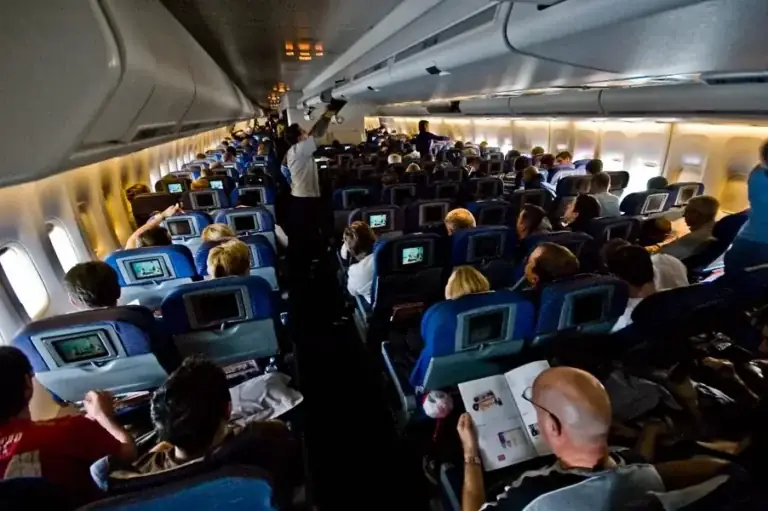
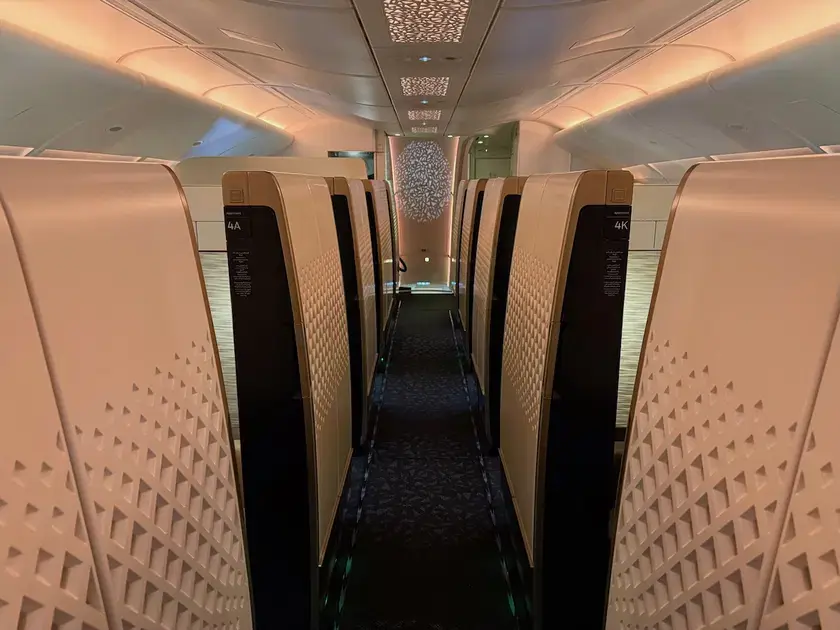
The physical reduction of first class cabins across global fleets has tightened availability. Over the past decade, major carriers phased out four-engine aircraft such as the Boeing 747-400 and Airbus A340-600, which featured spacious first class sections. Airlines replaced these long-haul jets with twin-engine aircraft like the Boeing 787 and Airbus A350, configured primarily with expanded business class cabins and smaller first class suites.
With total first class seats per flight dropping from twelve or sixteen down to four or eight, availability tightened significantly. A single corporate booking or family purchase can eliminate available award seats on a route for an entire week.
The Expansion of Transferable Points Currencies
The growth of flexible credit card points programs has increased competition for available award seats. Instead of earning miles exclusively through flight activity or single-airline co-branded cards, travelers accumulate transferable currencies across multiple programs. This consolidation enables larger populations to target identical premium award seats, increasing redemption pressure at key booking windows.
Conceptual Frameworks and Mental Models
The Dual-Release Window Model
Airlines generally release first class award inventory in two primary operational phases. The initial phase occurs at the opening of the flight schedule, between 305 and 360 days before departure, depending on the carrier. Airlines release baseline award inventory during this window to capture early planners and anchor base loads.
The secondary phase occurs close to departure, typically within 14 days of flight time. As departure approaches, revenue management algorithms re-evaluate unsold first class inventory. If the system predicts seats will remain empty, it releases them as award inventory to clear remaining space.
The Point Liquidity Pyramid
Different points currencies offer varying levels of operational flexibility. Transferable currencies sit at the top of the pyramid, allowing capital to remain uncommitted until award availability opens. Proprietary airline miles occupy lower tiers because they tie funds to a single program, exposing capital to devaluation risk and routing restrictions.
Maintaining liquidity in transferable point programs allows travelers to pivot between airlines and global alliances when inventory releases on alternative carriers.
The Cascading Route Matrix
When primary direct routes lack first class availability, the cascading route matrix evaluates secondary nodes and positioning flights. Instead of searching exclusively for direct city pairs, travelers break the journey into regional hubs, evaluating segment availability independently.
Key Categories and Variations of Award Inventory
Saver vs. Standard/Anytime Awards
Saver-level awards represent baseline redemption rates established by traditional award charts. These seats draw from specific inventory sub-classes and offer the highest point value. Standard or Anytime awards draw from general cash inventory, making seats available at significantly higher redemption rates that scale with cash prices.
Married-Segment Inventory Control
Airlines frequently apply married-segment logic to prevent travelers from booking individual flight segments separately. Under this system, an airline may offer first class award space on a connecting itinerary (e.g., Frankfurt to Singapore via Jakarta) while blocking that same seat for passengers seeking only the long-haul segment (Frankfurt to Singapore).
Managing married-segment restrictions requires testing different origin and destination combinations within an airline’s route network.
Detailed Real-World Scenarios
Scenario 1: Transpacific Peak Season Redemptions
A traveler seeks two first class seats from North America to East Asia during peak holiday seasons. Direct searches yield zero saver award space across major alliance carriers. Revenue management systems project full cash utilization due to seasonal travel demand.
To solve this issue, the traveler splits the party across consecutive departure dates or parallel routing hubs. One passenger departs from San Francisco while the second departs from Los Angeles, converging at the destination hub. Alternatively, they secure business class awards as a baseline while monitoring last-minute first class releases.
Scenario 2: Connecting Short-Haul Segments Blocking Long-Haul Space
A traveler searches for a first class award from Chicago to Doha. The system shows no availability. However, searching the long-haul segment from Washington Dulles to Doha reveals open first class award seats. Married-segment logic or short-haul domestic space limitations were suppressing the overall result.
The traveler books the international first class segment separately using miles, then purchases a standalone domestic positioning ticket to connect to the international departure hub.
Scenario 3: Partner Program Discrepancies During Schedule Opening
An airline opens its reservation calendar 360 days before departure. A traveler attempts to book this seat using a partner program whose booking window opens only 330 days in advance. By the time the partner window opens, members of the operating carrier’s loyalty program have already booked the available seats.
To address this gap, the traveler uses transferable points to move capital directly into the operating carrier’s native program at the 360-day mark, accepting a slightly higher redemption rate to secure the seats before partner access opens.
Planning, Cost, and Resource Dynamics
Direct, Indirect, and Opportunity Costs
Booking first class awards involves more than the required mileage balance. Cash surcharges, carrier fees, and transfer times impact total redemption costs. Program selection significantly alters out-of-pocket expenses for identical seat inventory.
Managing Point Transfer Delays
Point transfers between financial institutions and airline loyalty programs are not always instantaneous. While many transfers complete within minutes, security reviews or system batches can delay transactions for up to several business days.
To manage this risk, travelers should utilize programs that allow free or low-cost award holds, such as Air France-KLM Flying Blue or Turkish Airlines, before moving capital. Where holds are unavailable, verify transfer timelines across user databases before initiating non-reversible transfers.
Tools, Strategies, and Support Systems
Automated Availability Aggregators
Modern award searching relies on automated tools that query airline global distribution system (GDS) instances. These platforms scrape route networks to identify open award buckets across dates and alliances.
-
Seats.aero: Optimized for broad calendar searches and close-in inventory tracking across multiple programs.
-
Point.me: Provides step-by-step routing instructions and real-time award availability for specific city pairs.
-
ExpertFlyer: Offers targeted flight monitoring and seat map tracking, sending alerts when specific fare classes (e.g., “F” or “O”) open.
-
Roame.travel: Delivers multi-program search visualization across transferable point ecosystems.
Strategic Use of Award Holds
A critical tactic in understanding how to manage first class award availability issues involves securing temporary award holds. Certain carriers permit phone agents or web systems to lock award space for 24 to 72 hours without deducting miles. This hold window allows travelers to safely initiate point transfers from credit card accounts without risking seat loss during processing delays.
Risk Landscape and Failure Modes
Unannounced Award Chart Devaluations
Loyalty programs periodically adjust redemption rates without advance notice. When a program devalues its award chart, miles held directly within that loyalty program lose purchasing power instantly. Maintaining points within transferable banking currencies mitigates this risk until seats are confirmed.
Phantom Availability
Phantom availability occurs when an aggregator or partner website displays an open award seat that does not actually exist in the operating carrier’s GDS. Attempting to book phantom seats results in booking errors, typically after points have already been transferred.
To prevent trapped points, confirm seat availability on the operating carrier’s native booking engine or consult a phone representative prior to transferring funds.
Schedule Changes and Aircraft Swaps
Airlines frequently adjust schedules and aircraft assignments months in advance. An aircraft swap from an A380 to a B787 can eliminate the first class cabin entirely, downgrading passengers to business class.
When an aircraft swap occurs, passengers should contact the ticketing airline to request alternative routing on an aircraft that retains a first class cabin.
Governance, Maintenance, and Long-Term Adaptation
Maintaining an Award Booking Audit Checklist
Executing complex award redemptions requires verifying operational details systematically. The following checklist outlines key verification steps before and after booking:
Measurement, Tracking, and Evaluation
Evaluating Redemption Efficiency
To evaluate award redemption value, calculate the cents-per-point (CPP) yield of a prospective booking. Subtract out-of-pocket cash fees from the equivalent cash ticket price, then divide the remainder by the total points required.
While first class tickets often yield high nominal CPP values due to expensive cash fares, travelers should measure value against their personal baseline willingness to pay rather than inflated cash sticker prices.
Qualitative and Quantitative Booking Logs
Maintaining a structured log of award availability trends helps refine future booking strategies. Track key metrics across target routes to identify patterns in inventory releases:
Common Misconceptions and Oversimplifications
Myth 1: Award Seats Are Released Randomly
A common misconception is that airlines release first class award space without structure. In reality, inventory allocations follow algorithmic revenue predictions. Seats open when probability models determine cash sales will fall below targets.
Myth 2: All Alliance Partners Access the Same Inventory
Travelers often assume that every partner within an alliance shares identical award access. Operating carriers prioritize their native program members, withholding premium inventory from partner programs or applying delayed release windows.
Myth 3: Transferring Points Instantly Guarantees the Booking
Transferring banking points into an airline program does not hold the target seat. If another passenger books the seat during transfer processing, points remain stuck in the airline program, where they cannot be transferred back to the bank.
Ethical, Practical, and Contextual Considerations
Using automated tools to search award availability requires adherence to website terms of service. Excessive scraping queries can lead to IP blocks or account suspensions. Additionally, speculative hold requests—locking multiple award seats across conflicting dates without intent to fly—restricts access for other travelers and prompts carriers to tighten hold policies. Balanced utilization of tools and booking systems maintains equitable access across loyalty ecosystems.
Conclusion
Mastering how to manage first class award availability issues requires moving beyond simple point accumulation to systematic execution. By understanding revenue management behavior, leveraging transferable currencies, and remaining flexible across routes and travel dates, travelers can navigate inventory constraints effectively. Success relies on preparation, accurate monitoring, and decisive action when premium award space opens.