Common First Class Passenger Mistakes: Transit Analysis
Commercial aviation operates as a complex ecosystem of logistics, spatial engineering, and service protocols. Front-cabin travel is engineered to minimize transit friction, preserve passenger energy, and optimize biological recovery across long-haul flight paths. However, the physical hardware of a suite or flat-bed seat represents only one component of the broader transit architecture.
Passengers accessing international first-class cabins frequently encounter operational inefficiencies caused by a lack of familiarity with ground handling logistics, cabin service timing, and aircraft interface dynamics. Bypassing terminal delays, managing circadian rhythm shifts, and utilizing ground infrastructure require deliberate planning rather than passive consumption.
Analyzing front-cabin transit through an operational framework reveals that total travel quality depends heavily on passenger preparation. Mistakes made during ticket selection, ground processing, in-flight dining, and biological rest management degrade the functional value of high-tier travel. This audit examines the structural mechanics of premium aviation, evaluating behavioral breakdowns and providing an analytical framework to maximize travel efficiency.
Understanding “common first class passenger mistakes”
Analyzing common first class passenger mistakes requires separating promotional luxury marketing from operational aviation realities. Front-cabin travel is designed as a system for friction reduction and physiological protection. An operational failure occurs whenever a passenger’s choice undermines the efficiency, rest potential, or seamless execution of the journey.
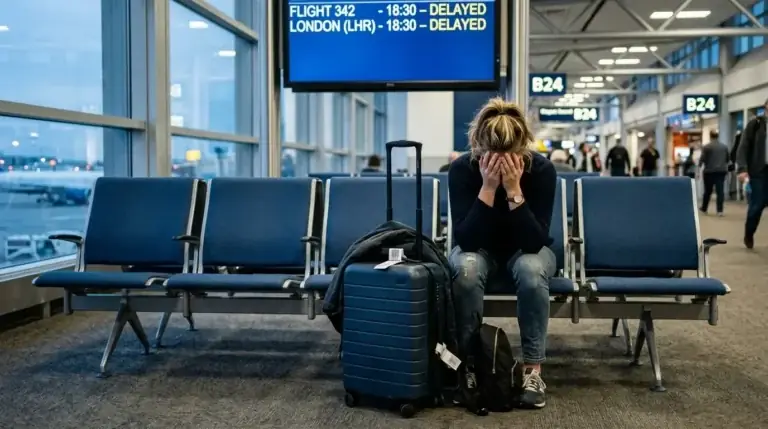
A common analytical error involves assuming that purchasing a high-tier ticket automatically guarantees a seamless travel outcome. Holding a premium ticket provides access to superior hardware and priority channels, but mismanaging connection windows, meal timing, or lounge amenities introduces unnecessary friction into the travel experience.
In-Flight Timing and Service Synchronization
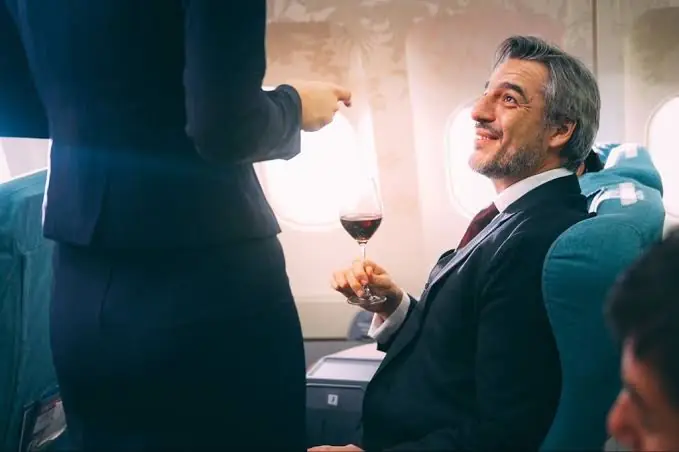
Cabin crew operate within defined service windows governed by flight duration, air traffic control restrictions, and safety regulations. Requesting multi-course dining late into a short overnight transcontinental flight forces crew to compress service, shortening the passenger’s actual sleep window.
Synchronizing meal preferences with target sleep schedules preserves biological rest. Recognizing cabin service flows allows travelers to decide when to dine and when to request immediate bed turn-down service.
Ground Infrastructure Utilization
Top-tier international departures feature specialized ground services, including private check-in lobbies, expedited security channels, and dedicated flagship dining lounges.
Arriving at the terminal too late forfeits access to high-end ground dining and private relaxation areas. Conversely, spending excessive time in ground lounges can lead to rushed boarding sequences and missed aircraft orientation steps.
Contextual Background: The Evolution of Front-Cabin Systems
Historically, early commercial aviation offered uniform cabin environments with limited spatial separation. As airlines introduced long-range jet aircraft in the mid-twentieth century, front-cabin travel evolved into an exclusive service class characterized by wide seats, gourmet dining, and personalized attention.
The deregulation of civil aviation in 1978 and subsequent economic shifts prompted carriers to restructure cabin spaces. Legacy airlines unbundled economy services while heavily capitalizing front-cabin environments to capture high-yield corporate travelers and affluent leisure clients.
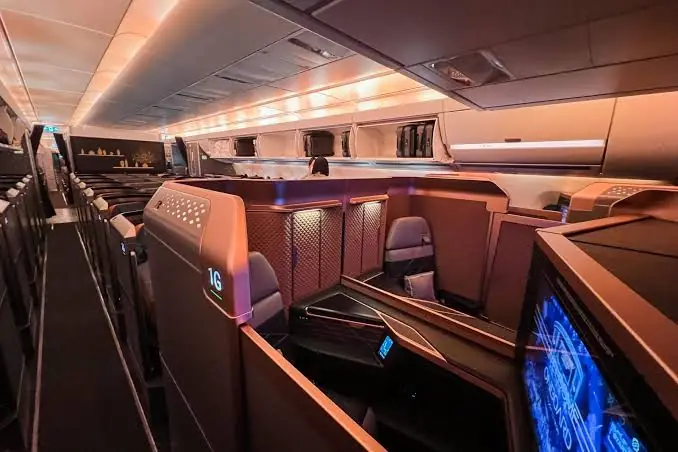
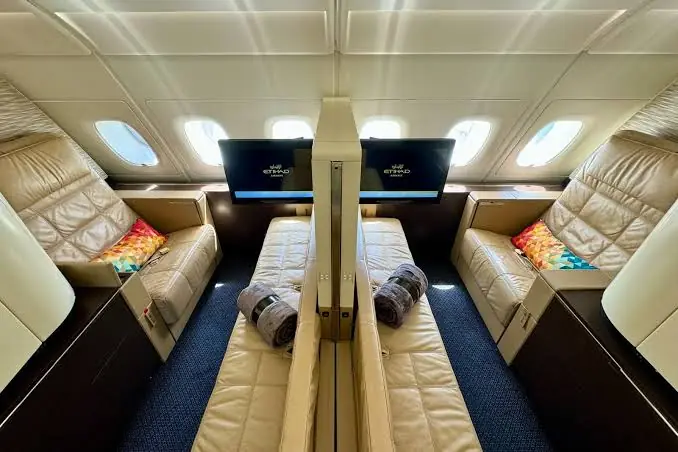
Over the past two decades, cabin engineering introduced lie-flat beds, private suites with sliding doors, and on-board shower facilities. Concurrently, ground handling evolved into private terminal complexes and tarmac limousine transfer systems.
However, as physical hardware grew more complex, operational rules became more rigid. Dynamic fare unbundling, partner lounge access restrictions, and strict seat selection policies created traps for travelers who assume all first-class tickets carry identical entitlements.
The Evolution of In-Flight Electronics and Controls
Early first-class seats relied on simple mechanical levers for recline and legrest adjustments. Modern flagship suites feature electronic control interfaces for seat positioning, pneumatic lumbar support, ambient lighting, and door operation.
Failing to understand these control panels often leads to suboptimal sleeping angles or accidental alerts to cabin crew during rest periods.
Ground Support Infrastructure Integration
Airports have increasingly separated premium passenger flows from general terminal traffic. Major international hubs now offer dedicated check-in buildings with direct, private security lanes leading into flagship lounges.
Navigating these facilities efficiently requires advance knowledge of terminal layouts, preventing unnecessary walking through crowded public concourses.
Conceptual Frameworks and Mental Models for Passenger Efficiency
Evaluating travel efficiency requires objective frameworks rather than reliance on brand marketing.
1. The Circadian Preservation Index (CPI)
This model measures how effectively an itinerary and in-flight routine preserve physiological energy and minimize jet lag.
Maximizing the CPI score requires declining multi-course meal services on late-night departures to prioritize immediate sleep.
2. The Ground-to-Air Friction Equation
This framework quantifies the physical stress and time lost across pre-flight processing and boarding routines.
Lowering total friction requires utilizing fast-track security lanes, selecting lounges near departure gates, and timing boarding to bypass gate queues.
3. The Net Utility Valuation Model
This model evaluates the actual value extracted from a front-cabin ticket compared to its financial cost or point outlay.
Applying this formula helps travelers determine whether paying a premium for first class over business class yields tangible improvements in sleep, productivity, and ground service.
Key Categories of Passenger Errors and Operational Trade-offs
Errors committed by front-cabin passengers fall into distinct operational phases, each presenting specific trade-offs.
| Error Category | Primary Operational Cause | Impact on Journey | Mitigation Strategy |
| Over-Dining on Short Red-Eyes | Prioritizing food service over sleep | Severely reduced sleep time; jet lag | Request immediate turn-down service upon boarding |
| Terminal Arrival Mis-Timing | Arriving too early or too late | Missed lounge dining or rushed boarding | Align terminal arrival with lounge dining schedules |
| Misunderstanding Lounge Rules | Assuming entry on domestic itineraries | Access denial at lounge desk; frustration | Audit lounge access rules for specific ticket classes |
| Neglecting Seat Mechanics | Inability to operate suite controls | Uncomfortable sleeping position; light exposure | Review suite control features during initial setup |
| Over-Consumption of Alcohol | Excessive consumption at altitude | Severe dehydration; disrupted sleep cycles | Balance alcohol consumption with hydration |
In-Flight Rest vs. Culinary Consumption
A primary conflict on overnight flights is the choice between multi-course dining and immediate sleep. Full meal services can consume up to two hours of flight time.
On a seven-hour transatlantic flight, participating in full meal service leaves less than five hours for sleep. Prioritizing rest over dining maximizes recovery for arrival day activities.
Boarding Priority Timing
Airlines offer priority boarding to front-cabin passengers, inviting them to board first. However, boarding early means sitting in a stationary cabin for thirty to forty-five minutes while remaining passengers board.
Boarding near the end of the process minimizes time spent in the cabin while ground air conditioning and power systems are operating at variable levels.
Detailed Real-World Scenarios and Breakdown Dynamics
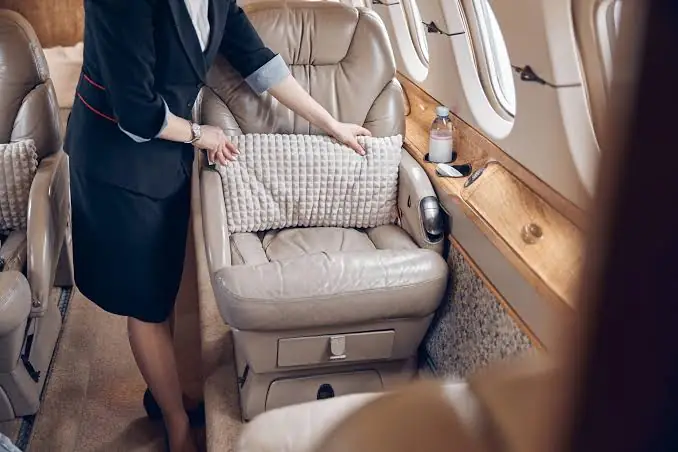
Examining real-world scenarios demonstrates how minor decisions can disrupt an otherwise well-planned itinerary.
Scenario A: Transatlantic Red-Eye from New York (JFK) to London (LHR)
A traveler boards a six-hour overnight flight departing at 10:00 PM, intending to work immediately upon arrival in London.
-
Execution: Participating in the full dinner service reduces sleep time to less than four hours.
-
Outcome: The traveler arrives in London fatigued, negating the primary advantage of the lie-flat bed.
-
Correction Strategy: Dine in the flagship lounge prior to boarding and request immediate turn-down service upon reaching cruising altitude.
Scenario B: Transpacific Daytime Flight from San Francisco (SFO) to Tokyo (HND)
A passenger flies an eleven-hour daytime flight departing at 11:00 AM, arriving the following afternoon.
-
Execution: Remaining awake and consuming alcohol throughout the flight disrupts the body’s internal clock.
-
Outcome: The traveler experiences severe jet lag upon arrival, taking several days to adjust to local time.
-
Correction Strategy: Structure in-flight rest windows to align with the destination time zone’s night hours.
Scenario C: Connecting Flight Lounge Access Failure
A traveler flies domestic first class connecting to an international business class flight on separate tickets.
-
Execution: Arriving at the domestic hub lounge, the traveler presents the domestic boarding pass and is denied access because the tickets are unlinked.
-
Outcome: Time is wasted negotiating entry at the lounge desk instead of resting.
-
Correction Strategy: Present both boarding passes at check-in or link reservations in advance to establish lounge entitlement.
Planning, Cost, and Resource Dynamics
Optimizing front-cabin travel requires managing time, financial outlays, and physiological energy across the entire journey.
Strategic Time Allocation Model
| Travel Phase | Target Time Window | Primary Focus | Operational Objective |
| Pre-Terminal | 3 to 4 Hours Prior | Check-in verification & transport | Eliminate transit delay risks |
| Terminal Ground Phase | 1.5 to 2.5 Hours Prior | Flagship lounge dining & rest | Complete meal service on the ground |
| Boarding Phase | 15 to 20 Mins Prior | Gate arrival & swift boarding | Minimize stationary cabin time |
| In-Flight Initial Phase | First 30 Mins | Bed configuration & hydration setup | Prepare space for immediate rest or work |
Ancillary Benefit Value Recapture
Evaluating the true value of a front-cabin ticket requires factoring in included services that offset out-of-pocket expenses.
Accounting for these offset inclusions ensures accurate financial comparisons across competing routes and airlines.
Tools, Strategies, and Support Systems
Executing a seamless front-cabin itinerary relies on leveraging dedicated tracking applications, ground support services, and clear pre-flight protocols.
1. Advanced Seat Map and Aircraft Tracking Engines
Tools like AeroLoom allow travelers to inspect exact suite dimensions, console alignments, and window placements.
Checking seat maps in advance prevents selecting suites adjacent to galleys or lavatories that experience continuous light and foot traffic.
2. Live Flight Monitoring Applications
Apps like Flightradar24 provide real-time updates on inbound aircraft locations and tail assignments.
Monitoring inbound aircraft movements helps anticipate departure delays early, allowing passengers to remain in quiet ground lounges longer.
3. Dedicated Ground Arrival Facilities
Major hubs offer arrival lounges featuring private shower suites, breakfast service, and pressing services for business clothing.
Utilizing arrival lounges allows travelers to freshen up immediately after long flights before heading directly to morning meetings.
The Risk Landscape: Failure Modes and Operational Bottlenecks
Front-cabin travel involves operational risks that can compromise spatial comfort and schedule execution.
Unannounced Aircraft Equipment Swaps
Airlines reserve the right to substitute aircraft models for maintenance or scheduling reasons prior to launch.
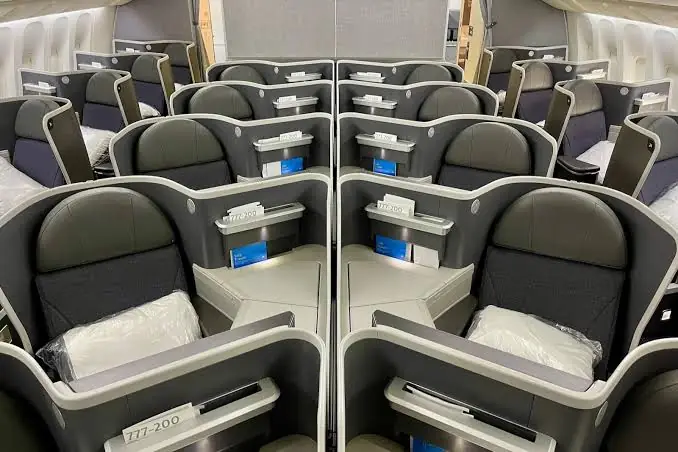
An equipment swap can replace modern enclosed suites with older seat designs, significantly altering spatial privacy and sleep quality.
In-Flight Noise and Light Disruptions
Even in high-tier cabins, ambient noise from galleys and light exposure from open suite doors can interrupt sleep cycles.
Carrying high-quality noise-canceling headphones, eye masks, and earplugs ensures uninterrupted rest regardless of cabin conditions.
Governance, Maintenance, and Long-Term Adaptation
Maintaining high travel efficiency requires systematic pre-flight verification routines.
Pre-Flight Verification Checklist
-
30 Days Prior: Inspect seat assignments to confirm optimal suite alignment away from galleys.
-
72 Hours Prior: Confirm valid lounge access entitlements across all connecting transit nodes.
-
24 Hours Prior: Review flight schedules, monitor inbound tail numbers, and confirm special meal requests.
-
Departure Day: Pack travel essentials, eye masks, and necessary medications in carry-on bags for easy access.
Measurement, Tracking, and Evaluation of Transit Performance
Evaluating travel performance relies on measuring objective metrics to guide future booking and transit choices.
Primary Evaluation Metrics
-
Rest Efficiency Ratio: Total hours of uninterrupted sleep achieved divided by total flight time.
-
Ground Friction Index: Time spent waiting in security or lounge lines divided by total layover time.
-
Arrival Readiness Rating: Self-assessed energy and cognitive performance level upon reaching the destination.
Sample Post-Flight Evaluation Log
Logging trip performance removes subjective bias, establishing a clear record of which transit strategies deliver optimal recovery.
Common Misconceptions and Strategic Corrections
-
Myth: Boarding the aircraft as early as possible is always the best choice for first-class passengers.
-
Correction: Boarding early forces passengers to sit in a stationary cabin during general boarding. Boarding near the end of the process minimizes time spent in a noisy cabin environment.
-
-
Myth: Participating in every course of the in-flight dining service maximizes ticket value.
-
Correction: Full meal services consume valuable flight time. Prioritizing sleep over dining on overnight flights yields far greater physiological value.
-
-
Myth: Holding a first-class ticket automatically guarantees entry to all partner lounges.
-
Correction: Access policies vary widely. Domestic first-class tickets often exclude lounge access, and partner lounges may enforce strict entrance criteria based on fare codes.
-
Ethical, Practical, or Contextual Considerations
Maintaining appropriate cabin etiquette ensures a comfortable environment for all passengers. Using speakerphones, playing media without headphones, or engaging in loud conversations during quiet rest periods disrupts cabin comfort.
Additionally, treats and polite communication with cabin crew foster positive interactions, ensuring attentive service throughout long-haul flights.
Conclusion: Analytical Precision in Front-Cabin Transit
Optimizing front-cabin travel requires treating the journey as a structured, operational system. Achieving maximum comfort, sleep recovery, and overall efficiency depends on recognizing common first class passenger mistakes and executing disciplined travel protocols.
By evaluating hardware capabilities, managing in-flight dining choices, prioritizing biological sleep, and measuring transit metrics, travelers transform front-cabin flight into an effective tool for personal renewal and professional performance.