Best First Class Cabin Options: Architectural Review & Routing Analysis
Commercial aviation operates under strict network physics and delicate economic yields. Premium cabin design occupies a highly specialized intersection of industrial engineering, regulatory compliance, and revenue management. Evaluating long-haul international first class requires moving past marketing brochures and surface-level travel reviews. Instead, one must analyze spatial density, fleet consistency, hardware durability, and operational ground systems.
Airlines allocate substantial capital toward top-tier cabins to capture high-yield corporate travel and secure brand prestige. However, the international market has fragmented significantly over the past two decades. The rapid improvement of business class seating has squeezed traditional first class offerings onto a narrow subset of ultra-long-haul routes. Consequently, evaluating premium seating requires a clear understanding of carrier strategies, fleet deployments, and route economics.
Navigating these travel environments requires an analytical approach. A well-designed cabin layout balances privacy, bed length, storage capacity, and service ergonomics. Individual seating configurations must be evaluated through structured metrics rather than relying on promotional images or superficial ratings.
Understanding “best first class cabin options”
The term best first class cabin options describes commercial seating hardware and service ecosystems designed to maximize passenger comfort and privacy. Evaluating best first class cabin options requires an examination of cabin dimensions, suite enclosure mechanics, climate controls, and service flows.
Multi-Perspective Interpretation
From an operational perspective, a top-tier suite represents an exercise in weight distribution and space efficiency. Aviation engineers must design seating structures that meet rigorous crash-test safety standards while incorporating complex electronic control systems.
From a commercial perspective, cabin design reflects a carrier’s yield strategy. Airlines configure aircraft floors to maximize revenue per square meter. Dedicated suites consume significant real estate, which means carriers must charge substantial price premiums to justify their installation on key global routes.
Common Oversimplifications and Risks
Travelers frequently assume that any seat labeled as first class automatically delivers superior comfort compared to modern business class cabins. However, older first class seats on unrefurbished aircraft often lack direct aisle access, private doors, or modern inflight entertainment systems.
Another common misunderstanding is focusing solely on seat pitch or bed dimensions. True travel quality relies heavily on ground services, dedicated terminal transfers, lounge dining, and cabin noise levels. Evaluating cabins without considering these surrounding operational factors often leads to disappointing long-haul journeys.
Deep Contextual Background: The Evolution of Premium Cabins
International premium travel has undergone major structural shifts over the past forty years. Regulatory changes and technological advancements continuously reshape how airlines configure widebody aircraft cabins.
Fleet Modernization and Space Allocation
During the late twentieth century, long-haul aircraft featured open-style recliners arranged in traditional layouts. The introduction of lie-flat seating in the late 1990s altered passenger expectations across major international markets.
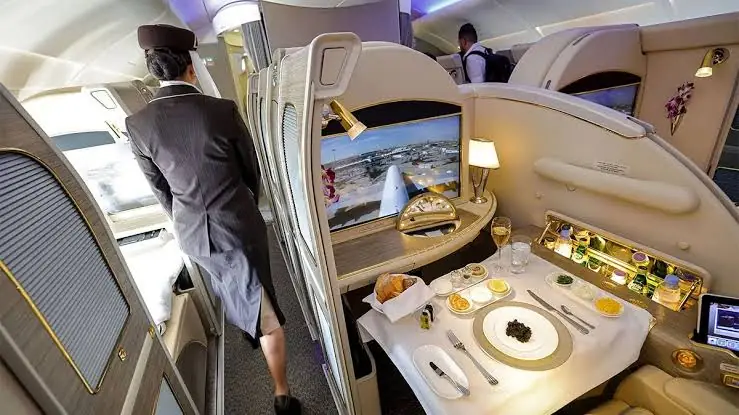
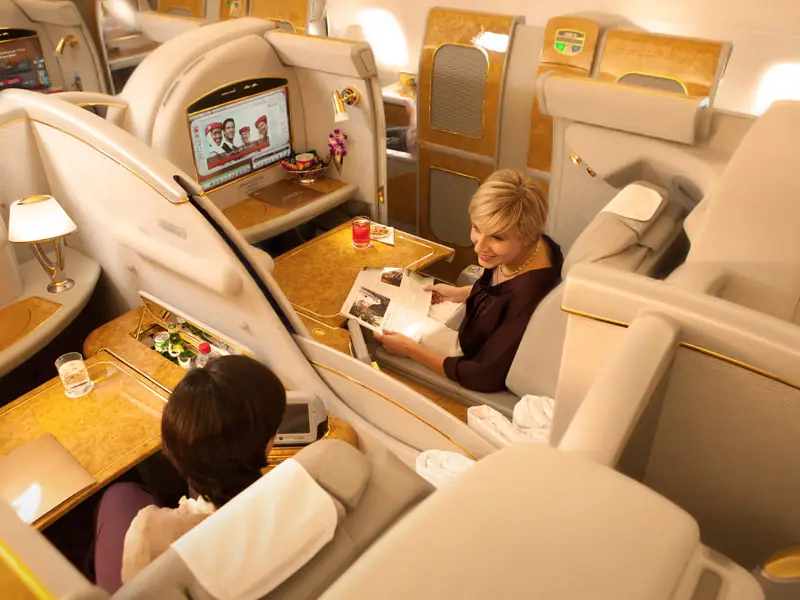
As business class evolved to include direct aisle access and sliding privacy doors, airlines were forced to redesign first class offerings completely. Carriers began replacing open seats with fully enclosed suites featuring high walls, personal wardrobes, and dedicated guest seating areas.
Strategic Cabin Differentiation
Fleet planners now deploy dedicated suites on specific high-yield corridors where market demand supports higher fares. Routes connecting global financial centers, such as London to New York or Tokyo to Los Angeles, remain prime markets for flagship suite products.
Simultaneously, carriers operating smaller widebody aircraft like the Boeing 787 or Airbus A350 often omit first class entirely. These decisions reflect a broader strategic shift toward high-density business class configurations across global networks.
Conceptual Frameworks and Mental Models
Analyzing international cabin designs requires structured evaluation models. These frameworks help measure space utilization, service continuity, and hardware performance.
1. Spatial Density Index (SDI)
The Spatial Density Index measures usable living area relative to total cabin floor space.
This model accounts for seat width, bed length, side-table surfaces, and storage volume. A higher score indicates superior personal space and enhanced freedom of movement during long flights.
2. Integrated Service Ecosystem
This framework evaluates the total passenger journey, from curb-side check-in to arrival handling. Dedicated check-in suites, private security lines, chauffeur transfers, and specialized lounges form an interconnected system that extends far beyond the flight itself.
3. Hardware Reliability Scoring
Mechanical reliability is crucial when evaluating complex suites with motorized doors, adjustable lighting, and climate controls. Cabins with simple, robust mechanical systems often maintain higher reliability ratings than over-engineered designs prone to component failure.
Subheading Distribution: Structural Cabin Analysis
Understanding physical layout variations helps travelers identify ideal seating options for specific route requirements.
Spatial Ergonomics
Suite design varies significantly depending on fuselage width and carrier design choices. Widebody aircraft like the Airbus A380 allow for multi-room arrangements and expansive side aisles. Narrower fuselages require more compact seating layouts to maintain efficient aisles.
Key Categories and Variations
Premium cabin configurations can be divided into several distinct design categories, each offering unique trade-offs in privacy, space, and service.
Category Overview and System Trade-Offs
| Cabin Category | Primary Platform Aircraft | Key Spatial Advantage | Primary Operational Drawback |
| Multi-Room Apartments | Airbus A380 | Separate bed and swivel chair | Limited route availability |
| Enclosed Private Suites | Boeing 777-300ER / A350 | Full-height walls and privacy | Slightly narrower cabin aisles |
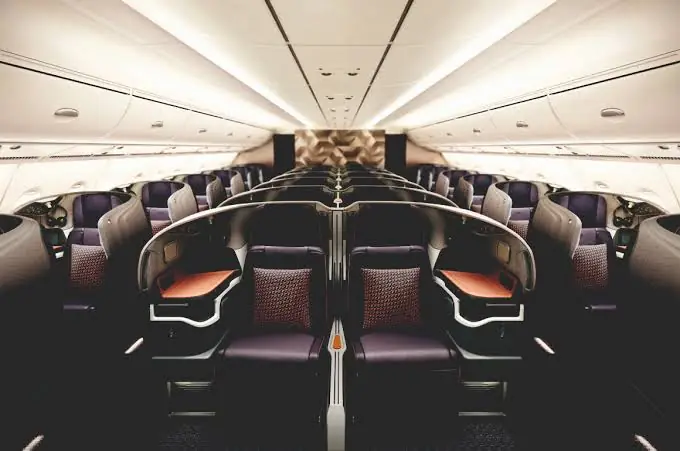
| Open-Architectural Suites | Boeing 777 / Airbus A330 | Spacious, open cabin feel | Lower visual privacy |
| Hybrid First-Business | Airbus A350 / Boeing 787 | Front-row extra legroom | Shares standard business service |
| Domestic Transcontinental | Airbus A321T / Boeing 737 | Direct aisle access on short routes | Smaller seat dimensions |
Detailed Category Breakdown
Multi-Room Apartments
Found exclusively on double-decker aircraft, these accommodations feature separate armchairs and permanent beds. Passengers can move freely within their private living space during long-haul flights.
These layouts provide exceptional comfort on flights over twelve hours. However, they are restricted to major hub routes capable of supporting superjumbo aircraft.
Fully Enclosed Private Suites
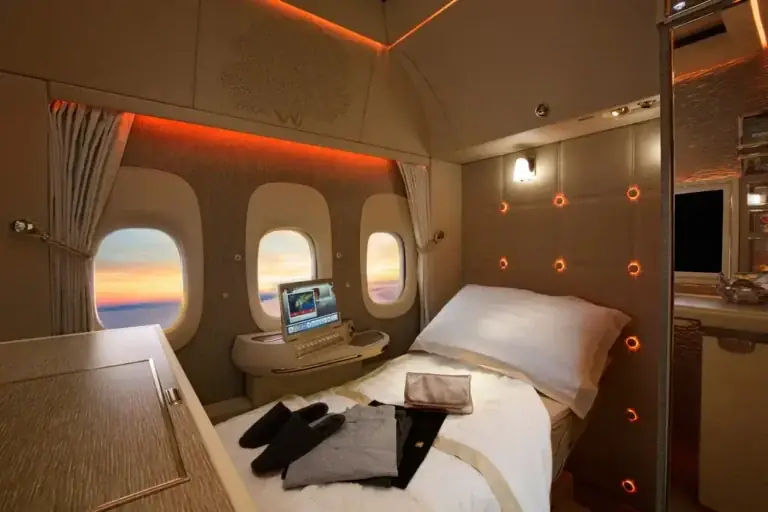
Enclosed suites feature floor-to-ceiling sliding doors, virtual windows, and individual climate controls. These designs create a quiet, private sanctuary within the aircraft cabin.
These suites excel at minimizing cabin noise and visual distractions. However, high suite walls can reduce the feeling of open space for some travelers.
Open-Architectural Suites
Open-style suites utilize fixed shell walls and wide armchairs without full privacy doors. These configurations emphasize roominess and clear views throughout the cabin.
These layouts offer easy communication for paired travelers. However, they provide less privacy from passing foot traffic in the aisles.
Decision Logic for Cabin Selection
Selecting from the best first class cabin options requires matching physical preferences with specific flight durations and schedules.
Detailed Real-World Scenarios
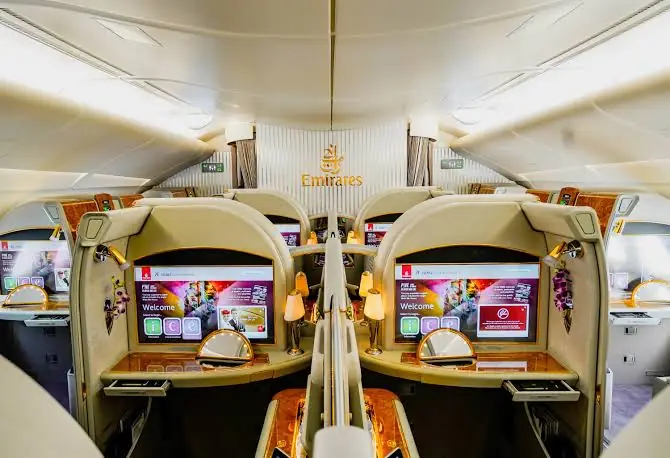
Analyzing real-world scenarios highlights how hardware features and route logistics impact overall travel quality.
Scenario A: Ultra-Long-Haul Transpacific Transit
A corporate passenger travels fifteen hours across the Pacific, requiring dedicated workspace and undisturbed rest before a morning meeting.
-
Constraints: High flight duration requires superior bed padding and effective cabin temperature management.
-
Decision Matrix: The traveler selects an enclosed suite equipped with custom mattress padding and personal temperature controls.
-
Failure Mode: A broken door mechanism prevents the suite door from closing fully during the flight.
-
Second-Order Effects: Cabin crew manually secure the partition, maintaining reasonable privacy for the passenger.
Scenario B: Transatlantic Daytime Journey
A traveler flies daytime from London to New York, prioritizing working space, high-speed internet, and dining service.
-
Constraints: Working effectively requires wide table surfaces and accessible power outlets.
-
Decision Matrix: The passenger chooses an open-architectural suite featuring a large dining and work table.
-
Failure Mode: Inflight Wi-Fi service fails mid-flight due to satellite coverage gaps.
-
Second-Order Effects: The traveler shifts to offline tasks, utilizing the large work table surface to review documents.
Scenario Analysis and Contingencies
Scenario C: Regional Connecting Segment
A passenger connects from an international flagship suite onto a two-hour regional flight on a smaller narrowbody aircraft.
-
Constraints: Regional aircraft feature standard recliner seating rather than lie-flat suites.
-
Decision Matrix: The traveler adjusts expectations, taking advantage of the lounge dining during transit to maximize rest on the short connecting flight.
-
Failure Mode: A delayed inbound flight reduces connection time, eliminating the planned lounge break.
-
Second-Order Effects: Ground connection agents meet the aircraft to fast-track the transfer directly to the departing gate.
Subheading Distribution: Financial and Operational Realities
Evaluating commercial availability requires analyzing both cash pricing structures and loyalty redemption mechanics.
Capital Allocation Strategy
Airlines must weigh the high cost of installing flagship suites against potential passenger revenue. Installing wide seats reduces overall cabin capacity, requiring high yields on every long-haul flight.
Planning, Cost, and Resource Dynamics
Securing access to best first class cabin options involves balancing financial costs, mileage redemptions, and schedule requirements.
Cost Dynamics Framework
| Booking Vector | Direct Out-Of-Pocket Cost | Resource Allocation Risk | Schedule Flexibility |
| Full Fare Commercial Cash | Premium pricing ($5,000–$15,000+) | High financial capital outlay | Maximum flexibility |
| Partner Mileage Booking | Low cash fee ($50–$250) | Mileage devaluation risks | Restricted availability |
| Day-of-Departure Upgrade | Moderate cash cost ($800–$2,000) | Space is never guaranteed | Standby status risk |
| Corporate Contract Rates | Negotiated discount pricing | Subject to corporate policies | Moderate flexibility |
Economic Trade-Offs
Cash pricing for top-tier cabins fluctuates based on route demand, seasonality, and corporate booking cycles. Loyalty redemptions offer lower out-of-pocket costs, but award seat availability is strictly managed by airline revenue systems.
Travelers must decide whether to pay cash for confirmed access or monitor award seat availability across partner programs.
Tools, Strategies, and Support Systems
Evaluating cabin options requires specialized resources to verify aircraft configurations and seat map layouts.
Essential Tool Categories
-
Seat Map Engines: Online databases that display detailed seating dimensions, pitch, and proximity to galleys or lavatories.
-
Aircraft Fleet Trackers: Real-time tracking services that reveal which specific plane tail numbers are scheduled for upcoming flights.
-
Award Availability Trackers: Search platforms that aggregate reward seat options across multiple airline loyalty programs.
-
Aviation News Portals: Industry publications that track fleet refits, cabin upgrades, and scheduled retirements.
-
Travel Concierge Services: Specialized booking agencies that manage complex international itineraries and ground arrangements.
-
Transit Visa Databases: Government portals that verify entry and transit regulations for international connection points.
Practical Verification Workflow
Step-by-Step Aircraft Verification
Airlines occasionally swap aircraft types close to departure. Confirming cabin details requires checking the specific plane assigned to your route.
Risk Landscape and Failure Modes
Understanding risks helps travelers manage unexpected schedule shifts or hardware issues effectively.
Risk Taxonomy
Equipment Substitution Risk
Last-minute aircraft substitutions represent the most common risk in premium travel. Maintenance needs may require an airline to swap a flagship aircraft for an older model lacking modern suites.
Inflight Hardware Failures
Complex suites incorporate motorized doors, lie-flat seats, and electronic entertainment systems. Mechanical failures can leave seats stuck upright or disable personal video screens during long flights.
Governance, Maintenance, and Long-Term Adaptation
Maintaining an effective approach to international travel requires staying informed about airline fleet updates and cabin modifications.
Regular Monitoring Practices
-
Track Fleet Updates: Follow airline announcements regarding cabin refurbishments and fleet additions.
-
Check Seat Maps: Review seat assignments regularly prior to departure to catch unannounced aircraft swaps early.
-
Audit Loyalty Rules: Review partner award charts periodically to adjust for program updates.
Subheading Distribution: Metric Evaluation
Tracking flight comfort and service reliability helps travelers choose carriers that deliver consistent experiences over time.
Evaluation Criteria
Long-haul passenger satisfaction depends on physical comfort, ground handling speed, and cabin service quality. Measuring these signals helps evaluate overall flight value effectively.
Measurement, Tracking, and Evaluation
Evaluating flight experiences requires tracking key comfort signals and service metrics across different journeys.
Real-World Evaluation Records
Case Record 1: Modern Enclosed Suite
-
Aircraft Platform: Boeing 777-300ER.
-
Hardware Condition: Full door functionality, working climate control, fully flat surface.
-
Ground Handling: Fast-track security and dedicated private lounge dining.
-
Overall Score: Exceptional privacy and rest quality.
Case Record 2: Older Open-Style Suite
-
Aircraft Platform: Airbus A330-300.
-
Hardware Condition: Open seat shell, functional bed, older entertainment screen.
-
Ground Handling: Shared business class lounge access without private dining.
-
Overall Score: Good physical bed space, but lower visual privacy.
Common Misconceptions and Oversimplifications
Differentiating airline marketing from actual cabin experiences helps prevent unrealistic travel expectations.
Key Travel Myths
-
Myth 1: First class is always better than modern business class.
Correction: New business class suites with sliding privacy doors often offer better technology and comfort than older first class seats.
-
Myth 2: All aircraft in an airline’s fleet feature the same suite.
Correction: Carriers operate multiple cabin sub-types across their fleets, meaning older aircraft may feature different seating.
-
Myth 3: Dedicated first class ground lounges are always available.
Correction: Private lounges are primarily located at major airline hubs, while secondary airports often share general business lounges.
-
Myth 4: Suite doors extend completely to the aircraft ceiling.
Correction: Most suite doors are designed with airflow space at the top, maintaining safety and ventilation during flight.
-
Myth 5: Booking a suite guarantees specific meal choices.
Correction: Catering supplies are finite, and specific dish options can run out on late night departures.
-
Myth 6: Direct aisle access is standard on all older first class cabins.
Correction: Certain legacy configurations still feature seats arranged side-by-side without individual aisle paths.
Ethical, Practical, and Contextual Considerations
Evaluating best first class cabin options also involves considering broader spatial and environmental factors.
Weight and Efficiency Balance
Heavy privacy doors, motorized mechanisms, and large seat structures increase total aircraft weight. Flight planners balance these luxury additions with modern, lightweight materials to keep fuel consumption within operational standards.
Safety Regulations
Suite doors must remain locked open during taxi, takeoff, and landing to comply with emergency evacuation rules. Passengers must follow cabin crew instructions regarding seat positioning during these critical flight phases.
Conclusion
Identifying the best first class cabin options requires an understanding of fleet layouts, aircraft types, and long-haul route dynamics. Evaluating suite designs, bed lengths, privacy walls, and ground services ensures travelers select options that truly meet their journey needs.
Successful travel planning relies on active monitoring and clear expectations. Verifying aircraft tail numbers, tracking fleet updates, and weighing financial options helps travelers secure comfortable, reliable long-haul journeys. Approaching international travel with structured evaluation methods turns complex cabin options into clear, enjoyable choices.