Luxury First Class Flight Routes USA: High-Yield Corridors & Network Analysis
Premium commercial aviation in the United States functions as a complex network asset driven by corporate yields and route economics. Operational decisions dictate which domestic and international corridors receive dedicated multi-cabin flagships. The allocation of long-haul widebody aircraft or specialized transcontinental narrowbody jets depends heavily on origin-and-destination demand, yield density, and competitive pressure between legacy carriers.
High-end route management involves balancing physical cabin footprints against network revenue potential. Long-distance transcontinental segments connecting coastal financial and entertainment capitals require sub-fleet standardization. Passengers on these corridors expect lie-flat seats, private door enclosures, elevated culinary offerings, and dedicated ground services.
Navigating these routes requires an analytical understanding of airline hub-and-spoke mechanics. Fleet scheduling shifts, seasonal demand adjustments, and positioning rotations influence aircraft availability. A comprehensive evaluation of these travel pathways must consider both inflight hardware and airport ground infrastructure.
Understanding “luxury first class flight routes usa”
Evaluating luxury first class flight routes usa requires looking at route geography, operational sub-fleets, and ground handling capabilities. The presence of premium cabins on specific routes is determined by corporate travel budgets and competitive market dynamics.
Multi-Perspective Interpretation
From an airline revenue management perspective, high-end domestic routes represent capital-intensive network commitments. Carriers assign specialized aircraft, such as Airbus A321 variants with dedicated suites or widebody Boeing 777 and 787 models, to specific city pairs to capture high-fare business traffic.
From a passenger perspective, evaluating luxury first class flight routes usa involves examining the total travel environment. This includes private check-in lounges, expedited security processing, specialized dining facilities, and quiet inflight suite enclosures.
Common Oversimplifications and Risks
A common misunderstanding is assuming that any route marketed as “first class” within the US offers lie-flat suites or premium lounge entry. Most domestic regional routes utilize standard narrowbody recliners without dedicated lounge access. True flagship service is restricted to a narrow set of transcontinental corridors and international gateway positioning legs.
Another risk involves ignoring operational equipment swaps. Airlines frequently reassign aircraft due to maintenance needs or international schedule shifts. Consequently, passengers may experience sudden product changes if their scheduled flagship jet is replaced by a standard domestic aircraft.
Deep Contextual Background: Evolution of Premium US Networks
The structure of premium aviation within North America has evolved through periods of economic deregulation, corporate expansion, and network consolidation.
Deregulation and Fleet Standardization
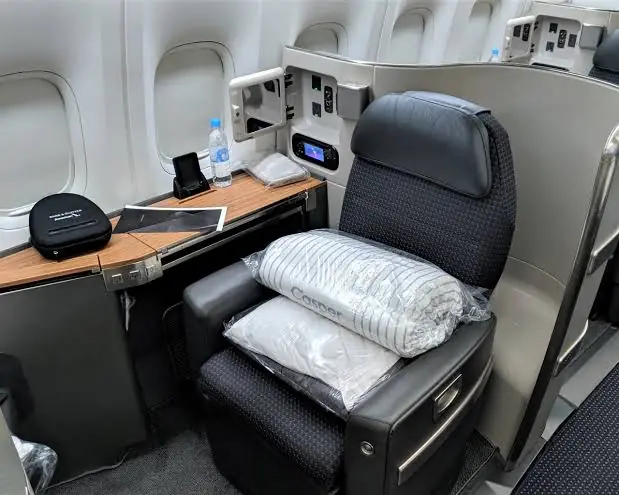
Following the Airline Deregulation Act of 1978, carriers restructured their route maps into hub-and-spoke systems. To maximize operational efficiency, domestic fleets were standardized around narrowbody aircraft featuring standard two-by-two recliner seating in forward cabins.
The Modern Transcontinental Shift
During the 2010s, intense competition for financial and entertainment sector travel prompted major US airlines to reintroduce premium long-haul seating on transcontinental routes. Sub-fleets equipped with lie-flat beds and sliding doors were assigned to non-stop flights connecting New York with Los Angeles and San Francisco. This established a clear division between standard domestic first class and flagship transcontinental services.
Subheading Distribution: Route Infrastructure & Hub Geometry
Understanding network structures requires examining how physical airport infrastructure supports high-end flight operations.
Airport Ground Facilities
Flagship routes depend on specialized airport ground installations. Facilities such as private curb-side check-in lounges, fast-track transit channels, and dedicated dining rooms are located primarily at major hub airports.
Conceptual Frameworks and Mental Models
Analyzing premium flight routes requires structured evaluation models. These frameworks clarify spatial comfort, schedule reliability, and service integration across different flight corridors.
1. Spatial Density Metric (SDM)
The Spatial Density Metric measures usable personal space relative to cabin floor area across domestic routes.
Higher SDM values indicate superior living space, distinguishing transcontinental lie-flat suites from standard narrowbody recliner seats.
2. Equipment Swap Risk Index
This framework measures the probability of unexpected aircraft changes. Routes operated by uniform, dedicated sub-fleets score lower in swap risk compared to domestic routes relying on irregular widebody positioning rotations.
Key Categories and Route Variations
High-end domestic routes fall into distinct categories based on geography, aircraft hardware, and ground service inclusions.
Route Category Comparison
| Category Type | Primary Geographic Corridor | Hardware Assigned | Ground Access Level |
| Flagship Coastal Transcontinental | JFK/BOS/EWR to LAX/SFO | Lie-flat narrowbody / widebody | Premium flagship lounges |
| Widebody Domestic Positioning | MIA/ORD/DFW to LAX/JFK | International long-haul widebody | Standard or flagship lounge |
| Hawaiian Long-Haul Corridors | West Coast / Mainland to HNL/OGG | Lie-flat widebody / narrowbody | Standard lounge or excluded |
| Regional Trunk Corridors | ORD to LGA / DFW to ATL | Standard narrowbody recliner | Excluded (requires membership) |
| Secondary Transcontinental | DCA/IAD to SEA/SAN | Standard narrowbody recliner | Excluded |
Detailed Category Breakdown
Flagship Coastal Transcontinental Corridors
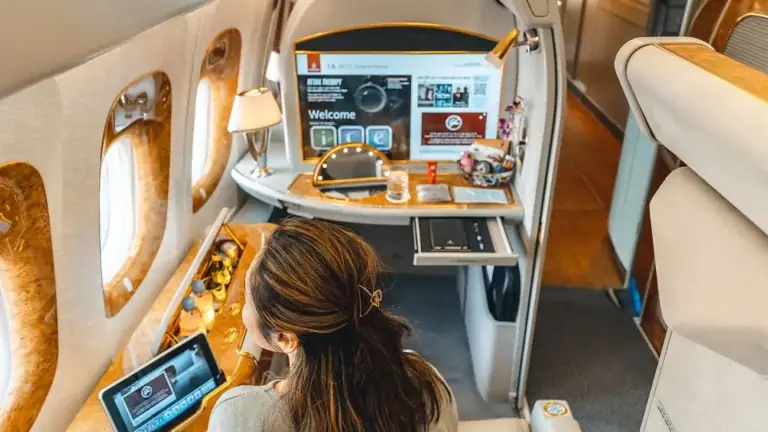
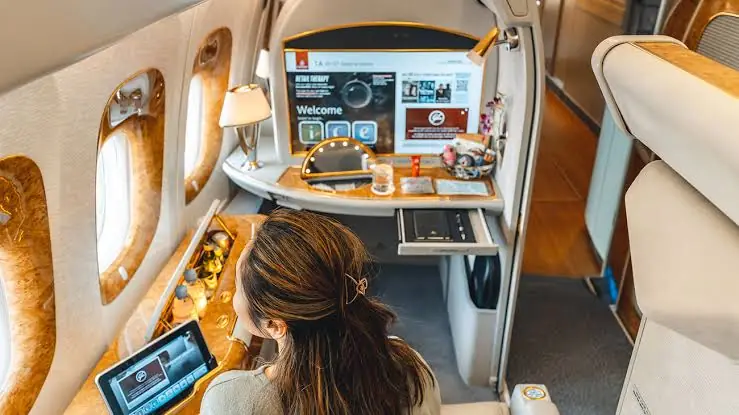
Connecting major financial and media hubs, these non-stop routes feature specially configured aircraft with private lie-flat suites.
These routes offer top-tier ground services, including dedicated check-in facilities and high-end dining lounges. However, cash fares and mileage requirements are high.
Widebody Domestic Positioning Routes
Carriers periodically operate long-haul widebody jets between major domestic hubs to align aircraft with international departure schedules.
These flights provide spacious international cabin hardware on domestic itineraries. However, schedule times depend on international aircraft rotations.
Hawaiian Long-Haul Routes
Operating from mainland hubs to Hawaii, these long-distance routes utilize widebody aircraft with lie-flat seating to serve leisure travelers.
These flights offer comfortable lie-flat seating for vacation travel. However, ground lounge access policies vary by carrier and ticket fare class.
Strategic Route Selection Logic
Choosing from luxury first class flight routes usa requires matching flight distances with scheduled aircraft configurations.
Detailed Real-World Scenarios
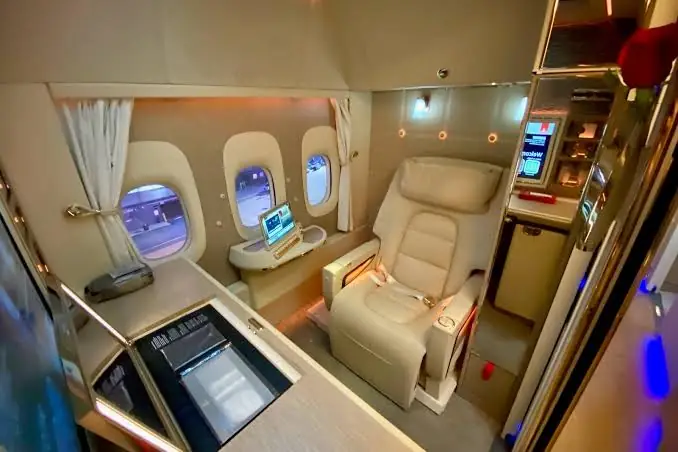
Analyzing operational scenarios demonstrates how route choices, equipment swaps, and ground access rules affect overall travel quality.
Scenario A: Transcontinental Corporate Transit
A business executive travels six hours from New York JFK to Los Angeles LAX, requiring rest before evening meetings.
-
Constraints: Long flight duration requires flat bed surfaces and dedicated work space.
-
Decision Matrix: The traveler selects a transcontinental suite flight on a dedicated sub-fleet, securing flagship lounge access.
-
Failure Mode: Winter weather delays departure from JFK by two hours.
-
Second-Order Effects: Dedicated lounge access provides a comfortable environment to work during the delay.
Scenario B: Domestic Hub Connection
A passenger connects through Chicago O’Hare on a trip from Boston to Denver.
-
Constraints: Standard domestic first class tickets exclude complimentary lounge access on hub transit itineraries.
-
Decision Matrix: The traveler uses independent lounge networks during the connection in Chicago.
-
Failure Mode: Flight delays reduce connection time to twenty minutes.
-
Second-Order Effects: The passenger misses the lounge visit but makes the connecting flight.
Scenario Analysis and Contingencies
Scenario C: Unplanned Equipment Substitution
A traveler books a domestic repositioning flight between Miami and Dallas, selecting a scheduled widebody aircraft.
-
Constraints: Positioning schedules are vulnerable to aircraft swaps if international schedules change.
-
Decision Matrix: The passenger chooses the widebody flight, verifying the seat map configuration before departure.
-
Failure Mode: An operational swap replaces the widebody plane with a standard narrowbody jet two hours before departure.
-
Second-Order Effects: The passenger retains a first class seat, but loses lie-flat bed capability.
Subheading Distribution: Financial & Fare Architecture
Evaluating route options requires analyzing cash pricing models, loyalty redemption rates, and secondary surcharge additions.
Fare Class Breakdown
Domestic first class pricing includes base airfare, federal segment taxes, and airport facility charges. Understanding fare construction clarifies overall costs across booking channels.
Planning, Cost, and Resource Dynamics
Evaluating choices among luxury first class flight routes usa requires analyzing cash fares, mileage redemptions, and lounge access rules.
Cost and Resource Dynamics
| Booking Option | Average Cash Fare | Mileage Redemption Range | Lounge Access Inclusion |
| Flagship Transcontinental Suite | $1,200 – $2,800 | 60,000 – 110,000 miles | Included (Flagship Lounges) |
| Widebody Domestic Positioning | $600 – $1,400 | 35,000 – 70,000 miles | Variable (Depends on route) |
| Hawaiian Lie-Flat Route | $900 – $2,200 | 40,000 – 90,000 miles | Variable |
| Standard Domestic Recliner | $400 – $1,000 | 25,000 – 50,000 miles | Excluded (Requires membership) |
Financial Value Comparisons
Flagship transcontinental routes command higher cash prices due to lie-flat suites and dedicated ground services. Standard domestic first class offers wider seating and complimentary drinks, but lacks flat beds or lounge access.
Tools, Strategies, and Support Systems
Navigating domestic route options requires digital tools to monitor aircraft assignments, track seat maps, and verify lounge policies.
Essential Tool Categories
-
Interactive Seat Map Engines: Search platforms displaying seat dimensions, recline angles, and cabin layouts.
-
Aircraft Tail Trackers: Flight monitoring software tracking tail numbers assigned to domestic routes.
-
Lounge Access Directories: Digital databases outlining entry rules based on ticket class and frequent flyer status.
-
Upgrade Availability Tools: Systems that search for open upgrade space in specific fare buckets.
-
Flight Status Alert Services: Mobile applications providing real-time delay updates and gate changes.
-
Fleet Refurbishment Logs: Aviation databases tracking fleet modifications and sub-fleet deployments.
Practical Verification Workflow
Step-by-Step Aircraft Verification
Carriers adjust domestic fleet assignments periodically. Confirming cabin details requires checking scheduled aircraft details prior to departure.
Risk Landscape and Failure Modes
Understanding travel risks helps passengers manage schedule changes, equipment swaps, and lounge restrictions effectively.
Risk Taxonomy
Equipment Substitutions
Maintenance needs can force an airline to replace a planned transcontinental jet with a standard narrowbody plane, removing lie-flat beds.
Lounge Access Exclusions
Passengers buying standard domestic first class tickets are often surprised to learn that lounge entry is excluded unless flying designated transcontinental routes.
Governance, Maintenance, and Long-Term Adaptation
Managing domestic travel requires staying informed about carrier fleet plans, route adjustments, and lounge policies.
Routine Itinerary Audits
-
Track Aircraft Assignments: Review flight details periodically before departure to catch unannounced equipment swaps early.
-
Verify Lounge Policies: Audit access rules based on specific ticket types and departure airports.
-
Confirm E-Tickets: Ensure electronic ticket numbers are properly issued after making itinerary changes.
Subheading Distribution: Metric Tracking & Route Performance
Tracking route quality involves evaluating seat comfort, ground priority speed, and catering standards over time.
Quantitative Performance Metrics
Measuring overall flight value requires evaluating seat dimensions, legroom, catering quality, and priority airport handling.
Measurement, Tracking, and Evaluation
Assessing domestic route options involves measuring physical seat space against ticket cost and schedule convenience.
Real-World Evaluation Records
Case Record 1: Coastal Flagship Transcontinental
-
Aircraft Platform: Airbus A321T.
-
Route Corridor: New York (JFK) to San Francisco (SFO).
-
Hardware Performance: Lie-flat bed, private sliding door, direct aisle access.
-
Ground Amenities: Flagship dining lounge access included.
-
Overall Rating: Outstanding long-haul quality on a domestic route.
Case Record 2: Domestic Widebody Positioning Flight
-
Aircraft Platform: Boeing 777-200ER.
-
Route Corridor: Miami (MIA) to Dallas / Fort Worth (DFW).
-
Hardware Performance: International lie-flat business suite.
-
Ground Amenities: Standard lounge access included.
-
Overall Rating: Excellent physical comfort at domestic fare levels.
Common Misconceptions and Oversimplifications
Differentiating airline marketing from actual domestic cabin offerings prevents unexpected travel surprises.
Key Route Myths
-
Myth 1: All domestic first class tickets include airport lounge access.
Correction: US airlines restrict lounge entry on domestic tickets, reserving access for designated flagship transcontinental routes or lounge members.
-
Myth 2: Coast-to-coast flights always feature lie-flat suites.
Correction: Primary hub routes feature lie-flat seats, but secondary transcontinental routes often operate standard narrowbody recliners.
-
Myth 3: Aircraft models remain fixed on domestic routes.
Correction: Airlines adjust domestic fleet assignments based on seasonal demand, maintenance needs, and positioning schedules.
-
Myth 4: Complimentary upgrades are guaranteed for elite members.
Correction: Upgrade availability depends on unsold inventory, elite status tier levels, and fare class priorities.
-
Myth 5: Hot meal service is provided on all domestic first class flights.
Correction: US carriers set minimum flight distance thresholds (typically 800+ miles) for hot meal service.
-
Myth 6: Regional jets offer lower quality seating space.
Correction: Dual-class regional jets featuring 1-2 seating layouts offer single window seats with direct aisle access and no immediate neighbor.
Ethical, Practical, and Contextual Considerations
Evaluating luxury first class flight routes usa involves considering sub-fleet constraints and airport infrastructure limits.
Operational Sub-Fleet Vulnerabilities
Operating small, specialized narrowbody fleets with lie-flat suites adds operational complexity. When a dedicated aircraft faces maintenance issues, carriers may struggle to substitute an identical plane without swapping to a standard narrowbody jet.
Airport Gate Restrictions
Deploying widebody aircraft on domestic hub routes requires gates equipped for large dual-aisle planes. Terminal gate dimensions often dictate which domestic routes can accommodate widebody positioning flights.
Conclusion
Understanding luxury first class flight routes usa requires analyzing route corridors, aircraft assignments, and airport lounge access policies. Looking past marketing titles allows travelers to identify options that provide real lie-flat comfort, dedicated ground services, and reliable schedules.
Selecting optimal flight paths relies on careful verification and realistic expectations. Checking scheduled aircraft sub-types, monitoring seat maps, and understanding lounge policies ensures comfortable cross-country journeys. Approaching domestic flight selection with clear analytical methods turns complex route choices into smooth travel experiences.